
Introduction
The appearance and the development of informational society had brought the civilization several new technologies that affected our everyday life. Some of them are ambivalent meaning that they bring comfort, effectiveness but also challanges at the same time. That is the problem with smart glasses too. While smart glasses are widely used in the fields of innovation, social media and entertainment, politics and everyday life the use of them implicates serious questions in connection with data protection: it can easily harm the individauls right to privacy and right to the protection of personal datas.
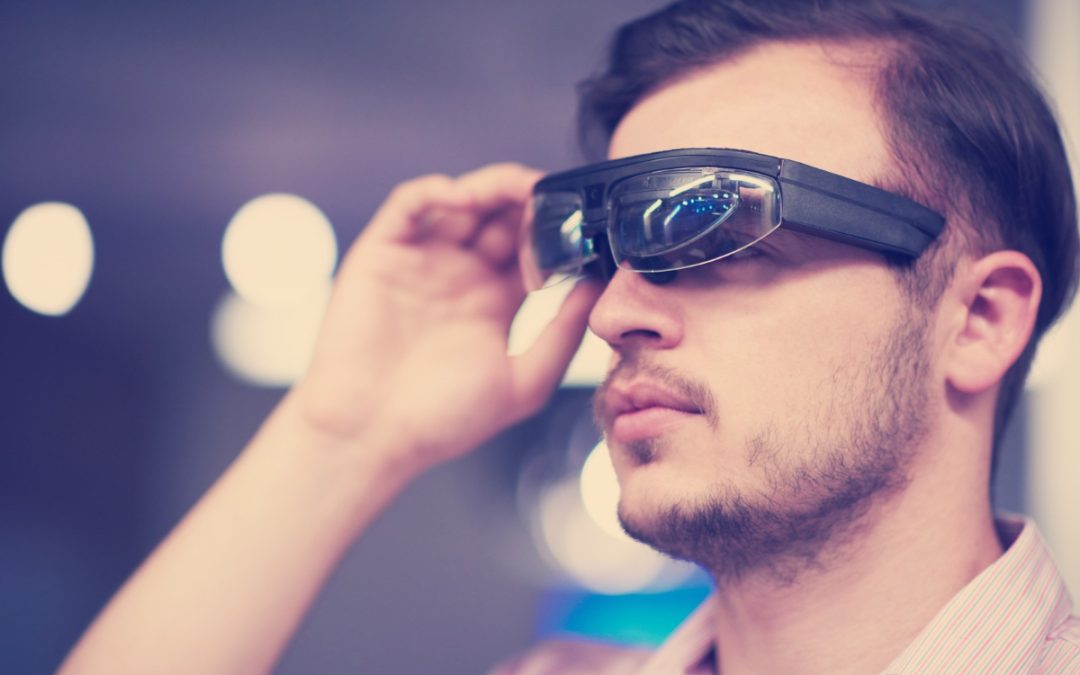
The European Data Protection Board’s (EDPB) has adopted a statement in connection with these questions. The definition given my the EDPB says that smart glasses are „wearable devices which often look like regular glasses or sunglasses, and which incorporate computing capabilities and features such as cameras, speakers, microphones, and software or applications, including artificial intelligence systems for various purposes (e.g. translation or object identification).”
How should we adapt to the spread of these smart glasses? How does data protection law sees this problem? What are the data subjects opportunities when they meet this kind of technological and legal problem? The aim of our article is to give a transparent overview on the main challanges that data protection law is facing with through the rules of General Data Protection Regulation (GDPR or Regulation).
The practical challenges of identifying the data controller
It is clear from the GDPR’s system of protection that the obligations arising under the Regulation, as well as the corresponding liability, rest with the controller. This raises an issue also identified by the EDPB: in the context of smart glasses, it is not always clear who should be regarded as the controller. Is it the user, the producer and/or the provider of a linked application or service (including AI systems)?
Under GDPR Article 4 point (7, a controller is the natural or legal person, public authority, agency or other body which, alone or jointly with others, determines the purposes and means of the processing of personal data. Particular emphasis should be placed on the second part of this sentence, as the EDPB also highlights on several occasions that smart glasses may give rise to specific situations in which more than one party qualifies as a controller.
2.1. The User
When considering whether the user qualifies as a controller, it is appropriate to examine the exemption concerning the material scope of the GDPR. Under this exemption, the Regulation does not apply to the processing of personal data by a natural person in the course of a purely personal or household activity (GDPR Article 2 paragraph (2) point c)).
The EDPB rightly observes that this exemption may primarily be relevant to the user. However, the exemption must be interpreted narrowly, and its applicability must be assessed on a case-by-case basis. For example, a user cannot publish photographs or videos recorded using smart glasses on publicly accessible social media platforms and still rely on the household exemption. Such activity falls outside the scope of the exemption, meaning that the user may qualify as a controller and must comply with the GDPR. Although it’s true, that also in this activity a case-by-case examination is needed.
The EDPB also draws attention to the fact that, where the exemption does not apply, the controller’s obligations may arise not only under the GDPR but also under other applicable legislation. For instance, unlawful processing of personal data may, in certain circumstances, also give rise to criminal liability.
2.2. The producer and/or the provider of a linked application or service (including AI systems)
The producer and/or the provider of a linked application or service (including AI systems)may therefore qualify as a controller where the user is not subject to the GDPR due to the application of the household exemption. In this regard, the EDPB states: „Where such actors are controllers, they are responsible for the compliance of their processing operations with the GDPR. Consequently, they should not rely on the users’ actions to meet their own GDPR obligations, such as transparency toward other individuals whose data might be processed when the smart glasses are being used.”
This means that the GDPR does not provide for the transfer or sharing of responsibility merely on the basis of the practical circumstances in which processing takes place. Even if the smart glasses are worn by the user, where the producer and/or the provider of a linked application or service (including AI systems) acts as the controller, it is the latter that must ensure compliance with the Regulation, particularly with regard to the principle of transparency.
The most important issue: transparency
The use of a technological device capable of recording images and sound while being disguised as an ordinary fashion accessory in the form of glasses raises data protection concerns in itself. As a result, individuals may not necessarily be aware that they are becoming data subjects whose personal data are being processed.
Such processing may therefore easily conflict with the principle set out in Article 5 paragraph (1) point a) GDPR, which requires that “personal data shall be processed lawfully, fairly and in a transparent manner in relation to the data subject”.
The EDPB has identified a number of technical measures – primarily addressed to producers and controllers – which may help prevent potential infringements of this principle when implemented in connection with smart glasses. These include the following:
- Visual, LED or audio indicators: Although many existing models already incorporate this approach, smart glasses may be equipped with visual, LED or audio indicators that make it apparent to individuals when image and/or audio recording is taking place.
- Smartphone-based proximity notifications: A specific technological solution may involve proximity notifications sent to nearby smartphones. This refers to a signal-based technology through which mobile phones in the vicinity receive a notification that someone is using smart glasses. However, this solution also entails further risks, as individuals who do not possess a mobile device capable of detecting such signals and displaying the relevant notification may effectively be excluded from the transparency mechanism.
- The design of smart glasses: The design of the device may also enable individuals to distinguish between a person wearing smart glasses and someone wearing ordinary glasses.
Additionally, it is important to emphasise that these solutions, even if they help address concerns relating to the principle of transparency, do not in themselves establish the lawfulness of the processing. Lawfulness primarily depends on the availability of an appropriate legal basis, which will be examined in the following sections.
The question of legal bases
Processing of personal data is lawful only if it is based on one of the legal grounds set out in GDPR Article 6 paragraph (1) point a)–f). Selecting an appropriate legal base in the context of smart glasses is particularly challenging in view of the difficulties arising from the nature of the technology, as outlined above. In this regard, the challenges confirm the view that the principles of data protection may serve both as safeguards governing the selection of a legal basis and as requirements that must be observed throughout the entire processing operation.
4.1. Consent
Under Article 6 paragraph (1) point a) GDPR, processing of personal data is lawful only if, and to the extent that, the data subject has given consent to the processing of their personal data for one or more specific purposes.
One of the difficulties associated with relying on consent as a legal basis is that consent must be obtained before the processing begins and must remain valid throughout the processing operation. Accordingly, if an individual is unaware that images and/or audio recordings of them are being made using smart glasses due to a lack of transparency, obtaining their consent retrospectively, after providing the relevant information, does not in itself render the processing lawful.
The EDPB follows a similar line of reasoning. It considers that consent may serve as an appropriate legal basis, provided that the requirements of Article 7 GDPR are fulfilled. Furthermore, Article 4 point 11) GDPR defines consent as any freely given, specific, informed and unambiguous indication of the data subject’s wishes by which they, by a statement or by a clear affirmative action, signify agreement to the processing of personal data relating to them.
Taking these requirements into account, consent may therefore serve as a legal basis where all the above conditions are met and consent has been obtained in advance.
4.2. Legitimate interest
GDPR Article 6 paragraph (1) point f) provides that processing is lawful where it “is necessary for the purposes of the legitimate interests pursued by the controller or by a third party, except where such interests are overridden by the interests or fundamental rights and freedoms of the data subject which require protection of personal data, in particular where the data subject is a child”.
Relying on this legal basis requires a prior balancing test, in which it must be established on a case-by-case basis whether the controller’s interests override the rights, freedoms and reasonable expectations of the data subjects. This assessment also serves to establish whether the processing is necessary.
However, relying on legitimate interests presents considerable difficulties in the context of smart glasses. Individuals in the vicinity cannot reasonably be expected to anticipate that their personal data may also be used for such purposes as training AI systems, particularly where they are not even aware that their data have been collected in the first place.
Accordingly, legitimate interests cannot be relied upon as a universal legal basis in this context. Its applicability must be assessed on a case-by-case basis, taking into account the strict requirements that must be satisfied.
What legal opportunities do the data subjects have?
The Regulation grants data subjects a number of rights under Articles 15–22 GDPR. Data subjects may exercise these rights by submitting a request to the competent supervisory authority in their Member State or, where appropriate, through the courts.
Among these rights, the EDPB also refers to the right to object, which is particularly relevant in the context of smart glasses. Under this right, “the data subject shall have the right to object, on grounds relating to his or her particular situation, at any time to processing of personal data concerning him or her which is based on point (e) or (f) of Article 6(1), including profiling based on those provisions. The controller shall no longer process the personal data unless the controller demonstrates compelling legitimate grounds for the processing which override the interests, rights and freedoms of the data subject or for the establishment, exercise or defence of legal claims.”
Data subjects may also exercise other rights, including the right of access, the right to rectification, the right to erasure, the right to restriction of processing and the right to data portability. Furthermore, where smart glasses are capable of carrying out automated processing, the rights relating to automated individual decision-making, including profiling, may also become relevant.
Further observations by the EDPB
In addition to the above considerations, the EDPB identifies other data protection aspects that should be taken into account. In particular, it is not only the principle of transparency that must be observed, but also the principle of data minimisation. Compliance with this principle can help controllers ensure that processing remains within the limits of lawfulness, for example by limiting the recording of images and sound, live streaming and the retention period of recordings.
Particular attention should also be paid to the use of smart glasses in sensitive locations. The legal assessment of recordings made in hospitals, where health data may be processed, or in schools and changing rooms, where the personal data of children may be involved, may differ significantly in light of the specific nature of the data and the circumstances of the processing.
The EDPB also considers the introduction of so-called privacy frictions and technical restrictions to be further effective measures. These may involve delaying the sharing of content on social media platforms or making such sharing subject to additional steps, thereby encouraging users to make more considered decisions before publishing content.
Conclusion
The overview showed that increasing prevalence of smart glasses presents new and complex challenges for data protection law. While these devices offer significant technological benefits and new possibilities for everyday use, their ability to capture, record and process personal data, often without the knowledge of individuals in their vicinity, raises important concerns regarding the protection of privacy and personal data.
It could be seen that the GDPR provides a legal framework for addressing these concerns. However, its effective application requires careful consideration of the specific characteristics of smart glasses and the circumstances in which they are used.
The use of smart glasses is not only a matter of technology or comfort: it is also a serious data protection based question. That is why the EDPB finds it necessary for the competent institutions of the European Union to make legislation and further guidance in the topic. It would be useful in order to protect the data subjects rights and the data subjects themselves from the harm of their fundamental rights. They emphasise that the guidance should be „accessible, easy to understand and practical for data protection in line with a risk-based approach.”
Dr. Péter Miklós-Kugli
Attila Saly
24 November 2026